The Neighborhood That Went Viral and Then Disappeared
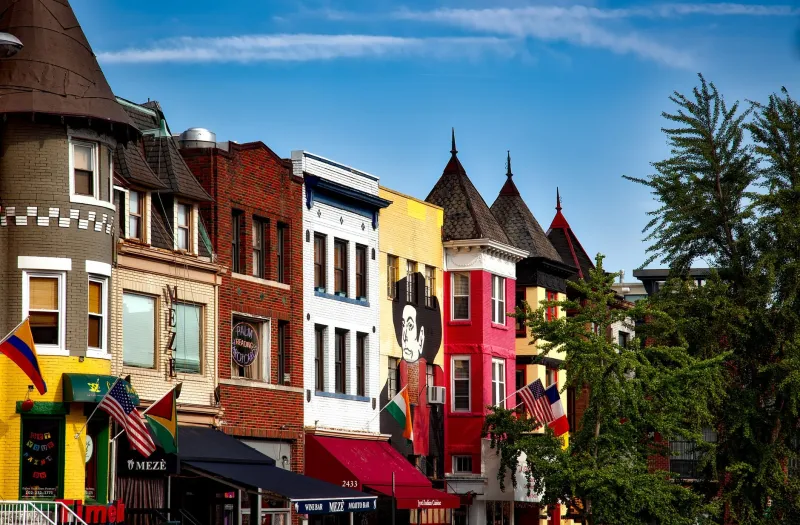
The mural went up in 2019. A local artist painted it on the side of a laundromat on a block that most people in the city barely knew existed — a working-class stretch of rowhouses and corner stores and a Dominican restaurant that had been there for thirty years. The mural was beautiful. Someone photographed it. Someone else shared it. By 2021, there was a line on weekends of people waiting to take pictures in front of it.
By 2023, the laundromat was gone. So was the Dominican restaurant. The artist moved to a different city because she couldn't afford her studio anymore.
This is a story that is happening everywhere, all at once, and it has a structure so predictable it almost feels scripted.
How a Neighborhood Goes Viral
The formula isn't complicated. A neighborhood has character — usually built over decades by working-class residents, immigrant communities, and artists who moved in because rent was low. The character expresses itself in murals, in food, in music venues, in the specific texture of a block that looks like nowhere else. Someone with a following discovers it. The algorithm does the rest.
Social media has compressed a process that used to take a generation into something that can happen in 18 months. What once required a magazine profile and a real estate agent whispering about an "up-and-coming" area now requires a single TikTok with the right audio.
"The discovery cycle has gotten so fast that neighborhoods don't have time to absorb it," says urban researcher and housing advocate Marcus Webb, who has studied displacement patterns in cities across the American South and Midwest. "By the time a community figures out what's happening, the investment has already moved in."
Case Study: The East Side That Became a Brand
In a mid-sized Midwestern city — one that had spent years trying to attract tech workers and tourism — a historically Black neighborhood on the east side became, almost overnight, the city's cultural calling card. Local food media discovered a cluster of Black-owned restaurants. Travel publications ran features. The neighborhood's name started appearing in "best neighborhoods in America" lists.
What followed was textbook. New coffee shops opened — the kind with exposed brick and $7 lattes. A boutique hotel announced plans. Rent increased 40 percent in three years. The restaurants that got the original coverage? Two closed. One moved further east, to a block that hadn't been discovered yet.
"We made this neighborhood interesting," says one of the original restaurateurs, who asked not to be named because she's still navigating lease negotiations. "And then interesting became expensive, and expensive meant we couldn't stay."
The cruelest part of this dynamic is that the thing that attracted investment — the authentic, community-built culture — is precisely what gets destroyed by the investment itself.
The Instagram Effect, Specifically
Social media platforms aren't the root cause of gentrification, which predates all of them. But they've introduced a new accelerant: visibility without consent.
When a neighborhood gets written up in a local paper, the discovery is relatively slow. When it hits a travel influencer's Instagram or becomes a trending audio backdrop on TikTok, the visibility is immediate, massive, and impossible to control. Residents and community organizations have no mechanism to opt out. The neighborhood becomes a location tag before anyone asks whether it should be.
"There's no negotiation," says Lena Park, a community organizer in Los Angeles who works with Korean-American business owners in a neighborhood that's been through multiple cycles of discovery and displacement. "The content just happens. And then the foot traffic happens. And then the real estate interest happens. And nobody asked us."
She's watched the same block get "discovered" twice in ten years — once by food media in the early 2010s, and again by a new generation of TikTok creators in 2022. Each cycle pushed rents higher. Each cycle brought in businesses that catered to visitors rather than residents.
The Residents Who Stay
Not everyone leaves, and the experience of longtime residents who stay through a neighborhood's transformation is its own complicated story.
In a gentrifying stretch of East Austin — a city that has become a case study in rapid cultural displacement — Maria Gutierrez has lived in the same house for 22 years. She owns it, which is the only reason she's still there. Her neighbors, mostly renters, have largely turned over. The Mexican bakery where she bought pan dulce every Saturday closed in 2020. A cocktail bar opened in its place.
"I'm still here, but my neighborhood isn't," she says. "The place looks different. The people look different. The sounds are different. I'm a stranger on my own street."
This is the part that housing statistics don't fully capture. Displacement isn't only physical. It's cultural. A community can be hollowed out even when some of its members remain.
Can the Cycle Be Broken?
Urban planners, housing advocates, and community organizers have been wrestling with this question for decades, and the answers are unsatisfying in their complexity.
Community land trusts — nonprofit organizations that acquire land and hold it permanently outside the speculative market — have shown real promise in cities like Burlington, Vermont, and Atlanta. When land is removed from the market, the displacement pressure eases. But scaling these models requires political will and upfront capital that most cities haven't been willing to commit.
Some advocates are pushing for "cultural district" protections — zoning mechanisms that prioritize existing businesses and residents in areas of recognized cultural significance. San Francisco, New York, and a handful of other cities have experimented with versions of this. Results are mixed. The protections often come too late, after the displacement is already underway.
There's also a growing conversation about the responsibility of platforms and content creators. Some influencers have started geotagging to neighborhood level rather than specific locations, or simply declining to post about places they sense are vulnerable. It's a small gesture, and not everyone agrees it matters.
"The problem isn't that people share beautiful places," says Marcus Webb. "The problem is that we've built an economic system where attention immediately converts to real estate value, and the people who create the attention have no stake in what happens next."
The Mural Is Still There
Back on that block — the one with the laundromat and the Dominican restaurant and the mural — the mural is still standing. New businesses have moved in around it. Weekend foot traffic is steady. The neighborhood, by any metric that real estate investors use, is thriving.
The artist checks in sometimes, from her new city. She says she's glad people love it. She also says she wishes she'd never painted it, which she admits sounds terrible, but she means it.
"I made something for that block," she says. "For the people who lived there. And it got taken and turned into something else. It's still my mural. It's just not my neighborhood anymore."
Somewhere right now, another mural is going up. Another corner has the specific, unnameable quality that makes a place feel alive. Someone is already pointing their phone at it.
The clock is running.