Handmade in America, Assembled Everywhere Else: The Supply Chain Secret Behind Your Favorite Artisan Brand
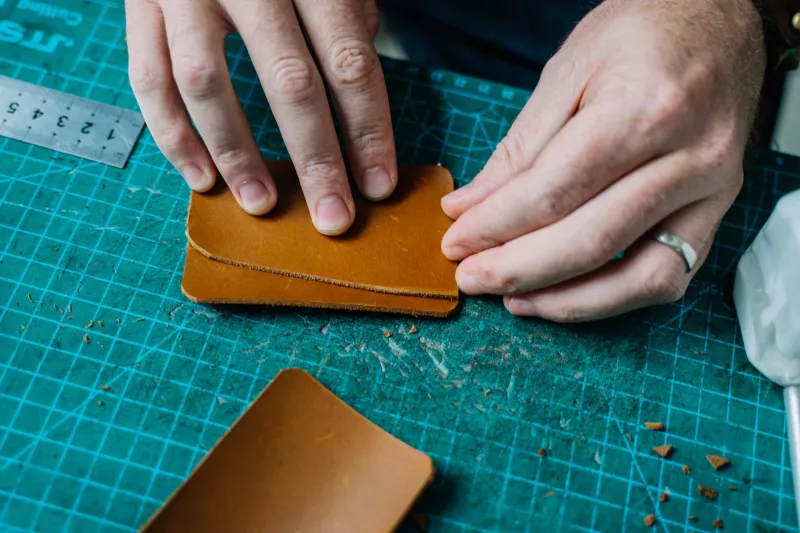
There's a particular kind of satisfaction that comes with buying something 'local.' You picture the maker — hands in clay, or stirring a copper pot, or hand-stitching leather in a sun-drenched studio somewhere in the Pacific Northwest. The product feels honest. It feels yours. And that feeling is worth paying for, which is exactly why so many small brands have learned to sell it.
But here's the thing nobody puts on the hang tag: almost none of it is as local as it looks.
The Myth of the Self-Contained Small Maker
Talk to enough small-business owners — really talk to them, off the record, over coffee — and a pattern emerges fast. The beeswax candle company sourcing its fragrance compounds from a distributor in Germany. The 'farm-to-table' hot sauce brand using chili peppers grown in Mexico because drought wiped out their California supplier for the third year running. The Brooklyn ceramicist who fires her work in kilns fueled by equipment parts that only exist because of a factory in Guangdong.
None of these people are frauds. That's the uncomfortable part. They're just operating in the real world, where a truly self-contained local supply chain is, for most products, economically and logistically impossible.
"I used to feel guilty about it," says Maya Chen, who runs a small-batch skincare line out of Portland, Oregon. "I'd go to the farmers market and people would ask if everything was local and I'd kind of... gesture vaguely. But the truth is, my shea butter comes from Ghana, my packaging supplier is in Taiwan, and my glass jars are manufactured in Mexico. What is local is my labor, my formulation, my relationships with my customers. Is that enough?"
For a lot of consumers, the honest answer is: they don't really want to know.
The Authenticity Economy Runs on Selective Disclosure
Marketing researchers have a term for this — strategic ambiguity — and it's baked into the entire artisan economy. When a brand says 'made with love in Colorado,' they're technically telling the truth. They're just not telling the whole truth. And consumers, by and large, aren't asking for it.
A 2023 survey from the Harvard Business Review found that shoppers who self-identify as 'conscious consumers' are significantly less likely to investigate supply chain claims than they believe themselves to be. We want to feel good about our purchases. Digging into the reality threatens that feeling. So we don't dig.
The brands that have figured this out aren't necessarily being cynical — many of them are genuinely conflicted. But the market rewards the story, not the spreadsheet.
"There's a version of honesty that kills your business," says Daniel Reyes, a furniture maker in Austin who sources his hardwoods from sustainable forests in Brazil. "If I led with 'Brazilian supply chain,' people would assume the worst. But if I show them the certification, the family that runs the forest, the relationship I've built over eight years — suddenly it's a feature, not a bug. The global part becomes part of the story instead of a contradiction."
When 'Global' Is Actually the Ethical Choice
Here's where it gets genuinely complicated: sometimes the most ethical option is the international one.
American-grown quinoa, for instance, often has a larger carbon footprint than Bolivian quinoa shipped by sea freight, once you account for the energy-intensive irrigation required to grow it domestically. Ethiopian coffee farmers earn better wages supplying specialty roasters in Brooklyn than they would supplying commodity buyers locally. The calculus of 'local good, global bad' falls apart almost immediately when you stress-test it.
Which means the real question isn't where something comes from — it's how it was made, and by whom, and under what conditions. That's a much harder question to answer on a cute chalkboard sign at a pop-up market.
"I think we've fetishized proximity," says food systems researcher Dr. Amara Osei of the University of Michigan. "Distance isn't inherently harmful. Exploitation is harmful. Unsustainable extraction is harmful. But we've conflated 'local' with 'ethical' because it's a simpler story to tell, and a simpler story to buy."
What Honest Branding Actually Looks Like
A small but growing number of brands are trying something radical: just telling the truth. Patagonia has long published detailed supply chain breakdowns. Newer companies like Nisolo (shoes) and Ritual Vitamins have built their entire identity around supply chain transparency, listing factory names, wages, and audit results directly on their websites.
It's not a perfect system — third-party audits have their own credibility problems — but it represents a different kind of consumer relationship. One built on information rather than atmosphere.
Maya Chen, the Portland skincare founder, recently updated her website to include a 'Where It Comes From' page listing every major ingredient and its country of origin. She braced for backlash.
"Instead, I got emails from customers saying they respected me more. One woman said it was the first time a brand had treated her like an adult." She pauses. "Sales went up that month. Go figure."
Maybe the authenticity paradox isn't a dead end after all. Maybe the next version of 'local' isn't about geography — it's about honesty. About makers who are willing to show their whole supply chain, not just the photogenic parts.
That's a harder thing to put on a hang tag. But it might be the only version of local that actually holds up.