Blink and You'll Miss It: The Tiny American Towns Blowing Up on Everyone's For You Page
Somewhere in central Kansas, there's a gas station that sells homemade cinnamon rolls the size of your face. A food blogger stopped there on a cross-country drive, filmed a 47-second video, posted it before she even finished eating, and by the time she hit Colorado the thing had 2.3 million views. The gas station's owner — a woman who has run the place for thirty years and never thought much about marketing — suddenly had a line out the door every weekend for the next three months.
This is the new American road trip story. And it's playing out in hundreds of towns across the country right now.
The Algorithm Finds the Map
For decades, the logic of American tourism was pretty simple: big cities, national parks, theme parks, and whatever made it into a Condé Nast feature. Small towns existed on the periphery, occasionally elevated by a quirky travel writer or a word-of-mouth reputation that spread slowly, organically, over years.
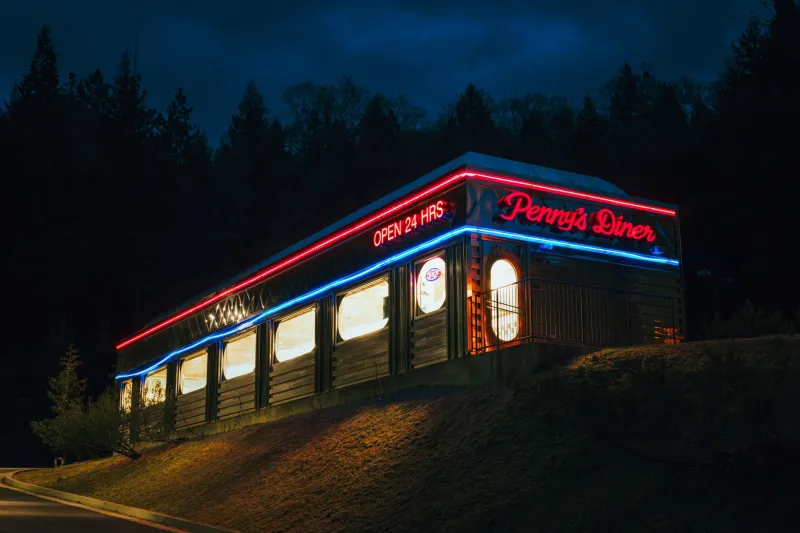
TikTok changed the physics of that entirely. The platform's recommendation engine doesn't care about population size or hotel infrastructure. It cares about compelling visuals, an interesting story, and the 30-second hook. A small town with a photogenic diner, a weird local legend, or a genuinely excellent slice of pie now has the same shot at virality as any major metropolitan attraction — and sometimes a better one, because the novelty factor is through the roof.
Places like Marfa, Texas were early proof of concept: an obscure West Texas art town that became a pilgrimage site for a certain kind of aesthetically-minded traveler. But Marfa had years and a specific art world infrastructure to absorb its fame. What's happening now is faster, less predictable, and hitting communities that have no playbook for it whatsoever.
Welcome to Town (Please Don't Break Anything)
Take Mentone, Alabama — population around 300, sitting up on Lookout Mountain with genuinely stunning fall foliage. A few years ago, a handful of TikTok videos featuring the area's scenic overlooks and a beloved local diner started circulating. Suddenly, leaf-peeping season went from a manageable local affair to a gridlock situation that left residents frustrated and local roads genuinely unsafe.
Or consider the tiny fishing villages along the Oregon coast that started appearing on travel TikTok as 'hidden gem' destinations — only to find that once a place gets labeled a hidden gem online, it immediately stops being one. The irony is almost cruel.
The tension is real and it's structural. These communities were not built for tourism infrastructure. Parking lots don't exist. Restaurants seat 20 people. The local bed and breakfast has four rooms. When 800 visitors show up on a Saturday because a video went viral on Wednesday, something has to give — and it's usually the residents' patience, the quality of the experience, or both.
But Also: It Can Be Genuinely Transformative
Here's the thing, though. For every overwhelmed small town, there's another one where the attention arrived like a lifeline.
Rural economic decline is one of the defining crises of American life over the past thirty years. Small towns across the Midwest and South have watched factories close, young people leave, and main streets hollow out. A viral moment can inject real money into communities that desperately need it — not just for the gas station selling cinnamon rolls, but for the hardware store next door, the motel down the highway, the family farm selling produce at a roadside stand.
In some cases, the social media attention has been a catalyst for genuine community reinvestment. Towns that never considered themselves tourist destinations have started organizing, building out local food trails, restoring historic buildings, and creating the kind of infrastructure that makes visitors want to come back — and stay longer.
The key difference seems to be whether the community has time and agency to shape the narrative, versus having virality happen to them without warning.
The Authenticity Paradox
Every travel content creator will tell you the same thing: what makes these places special is that they haven't been designed for tourists. The pie tastes that good because it's been made the same way for forty years. The mural is beautiful because a local artist painted it for the community, not for Instagram. The diner is perfect because the owner genuinely doesn't care what you think of the décor.
But the moment a place becomes known for those qualities, the pressure to preserve — or worse, to perform — them becomes enormous. Authenticity, once it's being watched, starts to curdle into something else.
Some towns have handled this thoughtfully. Local governments in a few viral-adjacent communities have started working with residents to develop what they're calling 'visitor compacts' — basically informal agreements about what gets shared, what stays private, and how visitors are expected to behave. It's a creative, community-driven solution that treats residents as stakeholders rather than background scenery.
Others have pushed back harder. There are small towns that have explicitly asked travel creators not to tag their location. A few have gone viral for asking people to stay away, which is its own kind of irony.
What We're Actually Hungry For
Zoom out for a second and the trend makes a lot of sense. We live in a cultural moment defined by sameness — the same chain restaurants in every airport, the same hotel design language from Austin to Atlanta, the same curated experiences that feel like they were built by committee for maximum inoffensiveness.
Small towns, at their best, are the opposite of all that. They're specific. They have flavor. They carry history and accident and the particular personality of whoever built them. That specificity is exactly what TikTok's visual language rewards, and exactly what a travel-hungry audience is craving.
The challenge — for travelers, for creators, and for the communities themselves — is figuring out how to engage with that hunger without consuming the thing that made the place worth finding in the first place.
The cinnamon roll is still worth the detour. Just maybe call ahead first.