Gotta Eat 'Em All: Inside America's Obsession with Collecting Local Experiences Like They're Going Out of Style
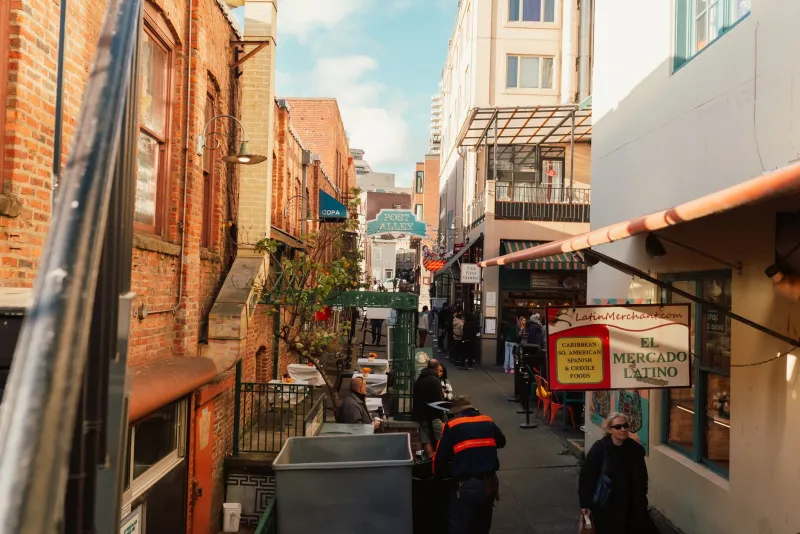
Somewhere in central New Mexico, a 27-year-old named Cassie is standing in line at a roadside chile stand that she found not from a travel guide, not from a friend's recommendation, but from a deep-dive TikTok rabbit hole that started at 1 AM on a Tuesday. She drove four hours for this. She will post about it. She will tag the location. She will describe, in some detail, why this specific green chile experience cannot be replicated anywhere else on earth.
She is not a food critic. She is not a travel writer. She is, by her own description, "just someone who really likes collecting things."
The things she collects just happen to be places.
The New Stamp in the Passport
Travel has always had a collecting impulse baked into it. People have kept journals, bought magnets, accumulated passport stamps, and bragged about their destination lists since long before social media existed. That's not new.
What's new is the granularity. The specificity. The fact that a younger generation of travelers isn't just trying to visit places — they're trying to find the exact, unrepeatable, hyper-authentic version of a place that proves they really went there, really got it, really didn't just do the tourist thing.
This is experience collecting, and it's turned regional American travel into something that looks a lot like a video game with very specific achievement unlocks.
The rules, loosely: chain restaurants don't count. Anything featured on a major travel publication's "best of" list is probably too mainstream. The goal is the thing that a local would tell you about — the diner that's been there since 1962, the festival that draws three hundred people from the same county, the regional snack food that you can only get in a gas station within a sixty-mile radius of one specific town.
Get the thing. Document the thing. Post the thing. Repeat.
Social Media as Treasure Map
The infrastructure that makes this possible is, obviously, social media — but not in the way you might expect. It's not that people are just following influencers to the same destinations. It's more complicated and more interesting than that.
What TikTok and Instagram have done is create a kind of distributed, crowdsourced travel knowledge base that rewards specificity. A video about "the best restaurant in New York" gets a thousand videos. A video about "this specific green chile stand in a town you've never heard of" gets shared by the three thousand people who grew up near there and feel personally validated, and then it gets shared by the ten thousand people who love finding things that feel undiscovered.
The algorithm rewards the niche. Which means the niche gets found. Which means the thing that was genuinely local and undiscovered becomes, paradoxically, a destination.
"I found the tamale lady through TikTok," says Derek, 31, from Atlanta, describing a vendor who operates out of a parking lot in San Antonio on weekend mornings. "She's been there for twenty years. Her regulars are people from the neighborhood who've been coming since they were kids. And now there are also people like me, who drove in specifically because of a video."
Derek is thoughtful about the tension in that story. "I don't know if I'm celebrating something or kind of ruining it," he says. "Probably both."
The Authenticity Arms Race
Here's the uncomfortable center of the experience-collecting phenomenon: it is, at its core, a competition. Not an explicit one, not a mean-spirited one, but a competition nonetheless — for the most authentic experience, the most undiscovered spot, the deepest cut of regional culture.
And like all competitions, it has a way of undermining its own stated goals.
The moment an experience becomes collectible — the moment it shows up on enough people's feeds that it has a reputation as an authentic, undiscovered gem — it is no longer undiscovered. The search for the real thing is, by nature, going to make the real thing harder to find.
There's also a question worth sitting with about what it means to treat someone's local culture as a collectible. The green chile stand in New Mexico, the tamale lady in San Antonio, the family-owned barbecue spot in rural Tennessee — these are not exhibits. They're businesses, and behind the businesses are people and communities with their own complex relationships to the attention that suddenly finds them.
Some of that attention is welcome. Revenue is revenue. Exposure can be lifesaving for a small business. But there's a version of experience collecting that is fundamentally extractive — where the traveler takes the story, takes the post, takes the cultural credibility, and leaves without much thought about what the place actually needs.
When the Collecting Becomes Real
The more optimistic version of this story — and it deserves to be told — is that experience collecting, at its best, creates genuine cross-cultural curiosity.
Cassie, back in New Mexico with her green chile, has been to the same area three times now. The first time was for the TikTok. The second time was because she actually loved it. The third time was because she started following local accounts, learned about a festival, and wanted to see something that wasn't on anyone's feed yet.
"The first trip was kind of performative, honestly," she admits. "I wanted the content. But then I got there and it was actually incredible, and I started wanting to understand it, not just document it."
That progression — from consumption to curiosity to something approaching genuine connection — might be the most honest thing the experience-collecting trend has to offer. Social media gets you in the door. What you do once you're inside is still up to you.
The question is whether the gamification of regional travel — the achievement-unlocking, the stamp-collecting, the proof-of-authenticity posting — makes it harder to just be somewhere, to be present in a place without immediately translating it into content.
For some people, the collecting is the thing, and the place is almost beside the point. For others, the collecting is just the excuse they needed to go somewhere they never would have gone otherwise — and what they find there changes something.
Both of those people are standing in the same line at the same chile stand. From the outside, you can't tell them apart. From the inside, the difference is everything.