Your Favorite Coffee Shop Is Your New Best Friend (And That's Not an Accident)
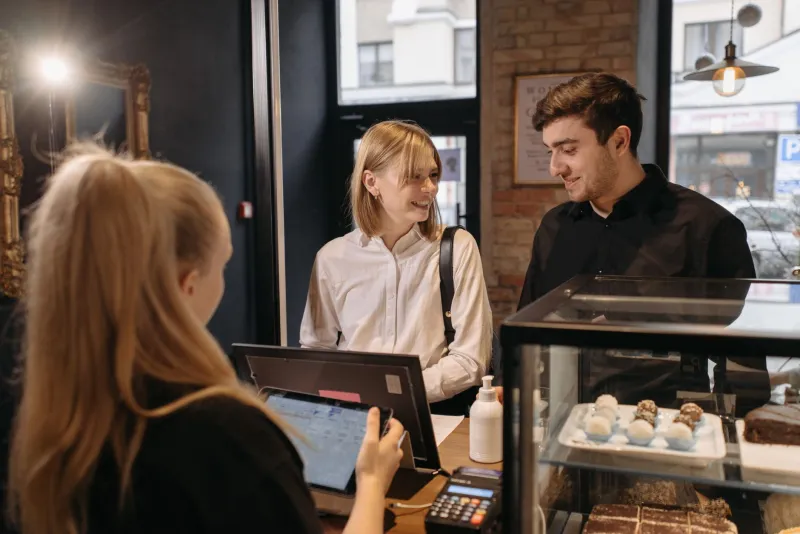
Somewhere between the third time Maya texted her followers to go support her friend's candle pop-up and the moment she realized she'd spent $200 at a ceramics studio owned by someone she'd met once at a farmers market, something clicked. "It doesn't feel like shopping," she says, laughing a little at herself. "It feels like showing up."
Maya, 24, lives in Portland and works in marketing. She could easily buy her coffee, her skincare, her weekend pastries from any number of faceless chains. Instead, she has what she calls her "roster" — a rotating cast of small businesses she follows, promotes, and spends money at with a consistency that rivals how she shows up for her actual friends.
This isn't a niche behavior anymore. It's a full-blown economic shift, and it has a name: the friendship economy.
When a Purchase Becomes Personal
For a long time, the story of consumer loyalty was pretty transactional. You bought from the brand that had the best rewards program, the fastest shipping, the lowest price. Brand loyalty meant a credit card with a logo on it. That model still exists, obviously — but for a growing segment of younger consumers, it's starting to feel hollow.
What's replacing it is something more emotionally complicated. Gen Z, in particular, is increasingly treating the businesses they support as extensions of their social world. The owner of the bookstore they love isn't a vendor — she's someone they root for. The guy making hot sauce out of his apartment in Houston isn't a seller — he's a character in their lives, someone whose wins feel personal.
Psychologists have a framework for this: parasocial relationships, the one-sided emotional bonds we form with people we don't really know. Social media accelerated this phenomenon dramatically. But what's new here is that the relationship isn't staying parasocial. It's converting into actual commerce, actual community, actual loyalty that looks a lot more like friendship than consumer behavior.
"I know when my baker is having a rough week because she posts about it," says Jordan, 26, from Austin. "When I go in on a Saturday morning and buy an extra thing I don't need, it's not because I want a muffin. It's because I want her to have a good day."
The Algorithm Did This (Kind Of)
It would be easy to credit — or blame — social media for all of it, and social media is definitely part of the story. Instagram and TikTok have made it genuinely easy to follow the life of a small business owner in a way that used to require actually knowing someone. You see their 6 AM prep videos. You see the post when they almost had to close. You see the relief when a big weekend saves the month.
That access creates intimacy. And intimacy creates obligation — the good kind, the kind that makes you tell three people about a restaurant because you want it to survive.
But there's something else happening too, something the algorithm didn't manufacture. It's a response to scale. When everything is available everywhere, from anyone, at any time, the specific and the personal start to feel radical. Buying from a person — a specific, knowable, Instagrammable person — is a way of opting out of the anonymous machine of modern consumption.
Small business owners are noticing this and, increasingly, leaning into it.
"I used to think I needed to seem more professional, more polished," says Dani, who runs a natural dye textile studio in Asheville, North Carolina. "Now I just show people my actual life. The mistakes, the process, the dog knocking over the dye vats. And that's what keeps people coming back."
Loyalty That Looks Like Love
Here's where it gets genuinely interesting — and a little complicated. Because what Gen Z is doing isn't just passive loyalty. It's active advocacy. When they find a business they feel connected to, they promote it. They bring friends. They post about it unprompted. They defend it in comment sections. They mourn it publicly when it closes.
That's not consumer behavior. That's friendship behavior.
And for the small businesses on the receiving end, it can be genuinely life-changing. "My regulars aren't just customers," says Marcus, who owns a vinyl and coffee hybrid shop in Chicago's Logan Square neighborhood. "They're basically my street team. I have people who've brought in their entire friend groups multiple times. One guy literally sends me new customers with a note that says 'Marcus will take care of you.' That's not a loyalty program. That's a relationship."
The economics bear this out. Research consistently shows that word-of-mouth referrals convert at dramatically higher rates than paid advertising. When someone recommends a business to a friend, they're lending their own social credibility to the transaction. The business isn't just getting a customer — it's getting an endorsement from a trusted source.
For small businesses operating without marketing budgets, this is the whole game.
The Limits of Buying Friendship
Of course, it's worth asking: is this actually friendship, or is it a very sophisticated form of brand attachment that just feels warmer?
The honest answer is probably both, and maybe that's okay. Genuine affection for a local business and the humans behind it can absolutely coexist with the fact that you are, at the end of the day, a customer. The transaction is real. The relationship is also real. Those two things don't cancel each other out.
What's more worth examining is what happens when the friendship economy scales. When a business gets big enough, the intimacy that created the loyalty in the first place starts to erode. The owner stops posting personal updates. The vibe shifts. And the customers who came for the connection start to drift.
"I've watched it happen," Maya says. "A place gets popular, they hire more people, the owner isn't there as much, and suddenly it just feels like... a place. The thing that made you love it is gone."
That tension — between growth and intimacy, between success and the soul that created the success — is the central contradiction of the friendship economy. The businesses that figure out how to scale without losing the personal thread are the ones that will keep their communities. The ones that don't will find out that this kind of loyalty is as fragile as any friendship.
But for now, in coffee shops and ceramics studios and hot sauce operations across America, the friendship economy is very much open for business.