Fantasy Wardrobe, Real Zip Code: How the Algorithm Taught a Generation to Dress for a Life They Don't Have
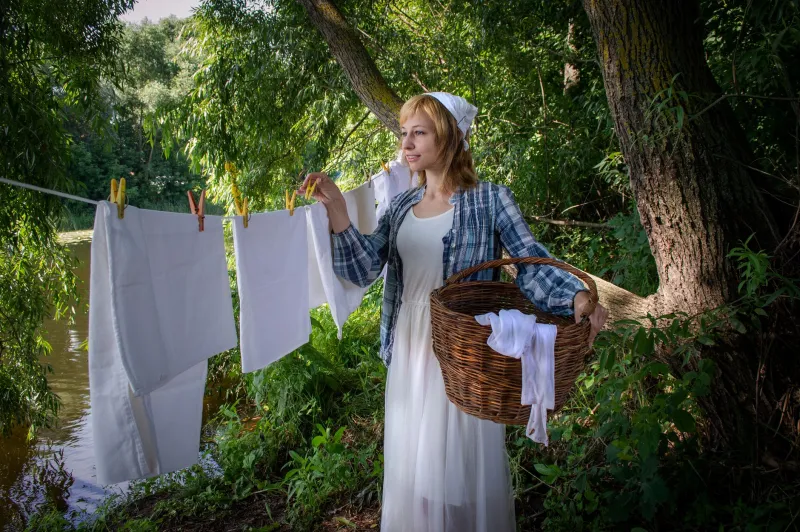
Somewhere in Naperville, Illinois, a nineteen-year-old is wearing a hand-embroidered peasant blouse, wool clogs, and a wicker basket tote — not to a Renaissance fair, not to a photo shoot, but to her Tuesday afternoon shift at a smoothie chain. She is, by every measurable metric, living in the suburbs of Chicago in 2024. But her outfit says she's a 1970s Swiss innkeeper who bakes her own bread and keeps goats.
This is not an isolated incident. It is, in fact, a movement.
The Algorithm Knows What You Wish You Were
TikTok's For You Page has done a lot of things to our collective brain, but one of its quietest and most enduring achievements is the creation of hyper-specific aesthetic identities that people actually build their closets around. We're not just talking about broad vibes here. We're talking about granular, Wikipedia-level specificity. Cottagecore. Dark academia. Coastal grandmother. Regencycore. Goblincore. Old money. Quiet luxury. Baltic sea resort circa 1923.
Each of these aesthetics comes with its own visual language, its own Pinterest board energy, its own emotional pitch. And thanks to the way recommendation algorithms work — feeding you more of whatever made you pause, double-tap, or watch twice — a kid who lingers on one video of someone journaling in a tweed blazer can find themselves, six weeks later, deep in a rabbit hole where every corner of their digital life is styled around the imagined interior of an Oxford library they've never visited.
The clothes follow. They always follow.
Dressing for a Curated Fantasy
What makes this moment genuinely different from the vintage revivals of past decades is the precision of it. Your mom might have gone through a '70s phase in the '90s, but she probably wasn't cross-referencing Etsy sellers, Reddit threads, and a seventeen-part TikTok series on "authentic" prairie silhouettes to nail the exact right shade of ecru. Today's aesthetic obsessive is doing all of that, and they're doing it with the full weight of an algorithm validating every choice.
The result is a generation that dresses not for their actual lives, but for the lives they're performing — or wishing they had. A college sophomore in a Cincinnati apartment might be fully committed to the dark academia look: structured blazers, vintage leather satchels, turtlenecks in November and honestly also in July. She's not a gothic literature scholar haunting the stacks of some centuries-old European university. She's got three roommates, a meal plan, and a commute that involves a shuttle bus. But the clothes aren't about where she is. They're about who she's decided to be, aesthetically speaking.
There's something almost poignant about that gap between the outfit and the setting. And also something kind of wonderful.
Is It Escapism, or Is It Actually Fashion?
Here's where it gets complicated. Fashion has always been about aspiration — wearing the life you want before you have it, or wearing the identity you're trying on for size. That's not new. What's new is the specificity of the fantasy and the speed at which it's constructed and distributed.
Cottagecore didn't emerge from a slow cultural shift. It exploded during the pandemic, when everyone was stuck inside and the idea of wandering through a meadow in a flowy linen dress felt like oxygen. The algorithm caught the mood, amplified it, and within months it was a full consumer category with dedicated Depop shops, Etsy storefronts, and think pieces (hi) analyzing what it all meant.
Critics will say it's performance. That there's something hollow about building an identity around a curated aesthetic rather than, say, your actual personality or cultural heritage. That wearing the clothes of a 1940s English librarian when you're a twenty-two-year-old in Phoenix is a kind of cosplay, not genuine self-expression.
But that critique feels a little too easy. People have always used clothes to reach toward something — a version of themselves that feels more interesting, more romantic, more intentional than their everyday circumstances allow. The algorithm just made the reach more specific. More visual. More shareable.
The Grandmother Paradox
There's a particular irony worth sitting with here. Many of the aesthetics that have taken hold among Gen Z pull from the wardrobes of actual grandmothers — and great-grandmothers. Coastal grandmother, the Diane Keaton-in-a-linen-blazer aesthetic that dominated 2022, is literally named for the style of an older generation. Dark academia borrows heavily from mid-century academic dress. Cottagecore is basically what rural European women wore out of necessity a hundred years ago.
So you have young people, raised on fast fashion and athleisure, deliberately reaching backward toward slower, more considered ways of dressing. Toward natural fibers and structured silhouettes and clothes that look like they were made to last. The grandmothers whose wardrobes inspired these aesthetics often had no choice but to dress that way. Now their grandchildren's grandchildren are choosing it, curating it, hashtagging it.
There's something genuinely touching about that loop. And something a little absurd. Both things are true.
When the Aesthetic Becomes the Identity
The bigger question isn't whether these aesthetics are authentic. It's what happens when the algorithm moves on and the aesthetic does too. TikTok aesthetics have a notoriously short shelf life. Cottagecore gave way to dark academia gave way to coastal grandmother gave way to quiet luxury gave way to whatever is trending by the time you read this. The kids who built their whole personality around one look are left with a closet full of clothes and a mood board that suddenly feels dated.
Some of them pivot. Some of them double down. Some of them — and this is actually the most interesting group — start to detach the clothes from the algorithm entirely. They keep the peasant blouse, ditch the TikTok, and just... wear what they like. The aesthetic becomes genuinely theirs, no longer tethered to a trend cycle or a For You Page.
That's when the costume becomes a wardrobe. That's when the performance becomes a person.
Dress for the Life You're Imagining
Maybe the girl in the wicker clogs in Naperville is onto something. Life is pretty mundane for most of us, most of the time. The commute is not cinematic. The apartment is not a stone cottage. The Tuesday shift is not a scene from a pastoral novel. But getting dressed in something that makes you feel like you exist in a more interesting story — even if that story is set in an Alpine village you've never visited — is a small and stubborn act of imagination.
Fashion has always been a little bit fiction. The algorithm just gave us a bigger library to borrow from.