Living the Aesthetic: America's Obsession With Places It's Never Actually Been
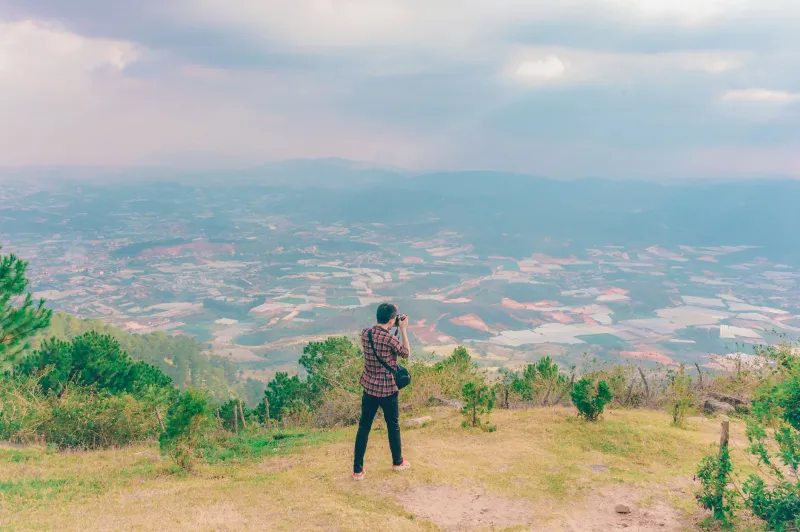
Somewhere in suburban Ohio, a twenty-two-year-old is posting content about the Louisiana bayou. She's never lived there. She visited once, for a long weekend, for a friend's birthday. But her TikTok is full of Spanish moss, Cajun recipes she learned from YouTube, and a softened vowel or two that wasn't in her voice six months ago. Her comment section is full of people who grew up in Louisiana telling her she's got the vibe exactly right. Her following has tripled since she leaned into it.
This is place-larping, and it's one of the weirder and more revealing things happening in American online culture right now. The practice of building an identity — or at least an aesthetic — around a place you're not actually from has always existed in some form. People have always romanticized regions, moved toward or away from them, adopted their cultural codes. What social media has done is accelerate and amplify the process until it becomes its own kind of content genre, with its own economy and its own complicated politics.
The Aestheticization of Everywhere
Every region of America has, at some point in the last few years, become an aesthetic. The Pacific Northwest has its moody greens and flannel and artisan coffee. Appalachia has its folk revival and old-growth forests and a specific kind of quiet that photographs beautifully. The American South — particularly New Orleans and the rural Deep South — has become a particularly potent aesthetic object: Spanish moss, cast iron cooking, heat, history, and a pace of life that looks romantic from a distance.
The Gulf Coast, the high desert of New Mexico, the forgotten industrial cities of the Rust Belt — all of them have been aestheticized, packaged, and made available to anyone with a Pinterest board and a willingness to curate. The result is that regional identity, which used to be something you were born into or slowly absorbed through years of actual living, has become something you can try on.
"There's something both flattering and deeply weird about watching people perform your home," says Kezia, a New Orleans native who has spent the last few years watching her city become a content genre. "Like, I'm glad people love it here. But there's a version of it online that has nothing to do with what it's actually like to live here. The hard parts, the expensive parts, the complicated history — that stuff doesn't make it into the aesthetic."
Why People Do It
The psychological appeal of place-larping isn't hard to understand. Place carries meaning in a way that's hard to manufacture through other means. Where you're from — or where you present yourself as being from — signals something about your values, your sensibility, your relationship to history and land and community. In a cultural moment when people are hungry for rootedness and authenticity, claiming a place is a shortcut to both.
For people who feel alienated from their actual geographic location — the suburb that doesn't have a culture, the midsize city that doesn't have a vibe — adopting the aesthetic of somewhere more storied is a way of filling that gap. It's not necessarily cynical. Sometimes it's genuinely aspirational, a reaching toward something that feels more real than what's available nearby.
Creators have been quick to figure out that regional identity is monetizable in ways that generic lifestyle content isn't. A cooking account that's just recipes competes with millions of others. A cooking account that's specifically about, say, the food traditions of the Mississippi Delta — with the history, the sourcing, the cultural context — has a more defensible niche. The place becomes a content strategy.
The Line Between Celebration and Erasure
Here's where it gets thorny. When does appreciation of a regional culture tip into something more extractive — taking the aesthetically pleasing parts while leaving the complicated reality behind?
The people who tend to get aestheticized are rarely the ones doing the aestheticizing. Appalachian culture has had a complicated relationship with outside romanticization for over a century — the region has been simultaneously condescended to and mythologized by people who don't live there. The same dynamic plays out with Southern Black food traditions, with Indigenous Southwest aesthetics, with the working-class cultures of the Rust Belt. The aesthetic gets adopted; the actual people and their actual struggles stay in place.
"It's the difference between visiting somewhere and listening to it," says Tomás, a food writer and Albuquerque native who has watched New Mexican cuisine go from regional obscurity to content-category staple. "A lot of the people posting about green chile right now don't know anything about the farming communities that grow it, or the politics around water rights, or what it costs to actually live here. They know what it looks like in good light."
That critique is fair. It's also not the whole story. Some of the creators who have adopted regional aesthetics have used their platforms to send real attention — and real tourism dollars — toward places that needed them. Some have become genuine advocates for the communities they fell in love with. The relationship between outsider appreciation and insider exploitation isn't always clean.
What Place Means Now
What place-larping ultimately reveals is how much Americans are still searching for the thing that place used to provide automatically: a sense of belonging to something specific, something with history, something that couldn't be replicated anywhere else. The homogenization of American commercial culture — the same chains, the same architecture, the same content — has created a hunger for the particular.
The internet has made it possible to satisfy that hunger virtually, by adopting the aesthetic of somewhere that still has it. Whether that's a meaningful form of connection or an elaborate performance of one probably depends on what you do with it. The Ohio girl posting bayou content might, eventually, move to Louisiana, learn the real thing, and become part of the community she was initially just borrowing from. Or she might move on to the next aesthetic when it stops performing well.
Either way, the places are still there — complicated, specific, resistant to being fully captured in a TikTok. That's probably the best thing about them.