The Ugly Bag Theory: Why Rich People Are Suddenly Obsessed with Buying Bad Stuff on Purpose

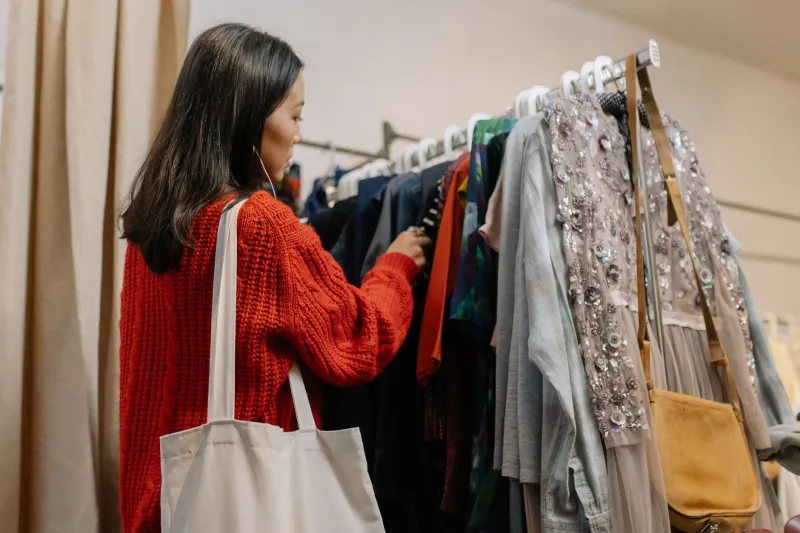
There is a tote bag making the rounds in certain Brooklyn apartments, certain Silver Lake coffee shops, certain corners of the internet where people are very, very online about aesthetics. It is not beautiful. It is not minimalist. It is not quiet. It is made of a slightly shiny synthetic material, printed with a generic graphic that looks like it was designed in Microsoft Word circa 2003, and it costs more than you'd expect for something that looks like it costs nothing.
People are buying it on purpose. People with taste are buying it on purpose. And they will explain, if you ask, exactly why.
Welcome to intentional mediocrity — the aesthetic trend that makes quiet luxury look try-hard.
The Tyranny of Good Taste
To understand why intentional mediocrity is having a moment, you have to understand what it's reacting against. For the past several years, the dominant aspirational aesthetic in American fashion and lifestyle culture has been a kind of studied, expensive neutrality. Quiet luxury. Old money. The idea that real sophistication is invisible — that the truly wealthy don't need logos because they already know, and they know you know.
It's a compelling idea, and it produced some genuinely beautiful things. But it also produced a new kind of tyranny. A world where every aspirational interior looks like the same Scandinavian fever dream, where every "elevated" wardrobe is some variation of cream, camel, and slate gray, where the performance of not caring about trends became its own exhausting trend.
Something had to give.
What gave is the rise of what you might call anti-taste: the deliberate, self-aware embrace of the ugly, the ordinary, the aesthetically incorrect. Not because the person buying doesn't have taste — they demonstrably do — but precisely because they have enough taste to reject it.
Ugly as Intellectual Flex
This is not a new idea in art. Outsider art, kitsch, camp, the entire history of avant-garde fashion — there's a long tradition of sophisticated people deploying the aesthetically wrong as a statement. What's new is that it's filtering down from art galleries and runway shows into the everyday consumer market, and it's doing so in a very specific way.
The key to intentional mediocrity as a status symbol is that it only works if the person doing it is clearly capable of doing something else. The ugly bag only signals what it's supposed to signal if the person carrying it is wearing something that makes clear they know exactly what they're doing. It's a joke, but you have to be in on it.
"It's the difference between wearing something ironic and just wearing something bad," says Theo, a stylist based in New York who's been watching the trend develop with a mix of fascination and mild exasperation. "When it's working, it's this very confident statement. Like, I'm so secure in my identity that I can carry something that looks like a grocery bag and you're going to think it's interesting. When it's not working, it just looks like someone got dressed in the dark."
The line between those two outcomes is almost entirely about context and confidence — which is, of course, exactly the point. Intentional mediocrity is a high-floor, high-ceiling game. You can't fake your way into it.
The Economics of Deliberate Ordinariness
Here's where things get genuinely weird: intentional mediocrity is expensive. Not always, but often. The ugly bag from the Brooklyn apartment? Made by a small designer who produces limited runs and charges accordingly. The worn-in, slightly misshapen sweater that looks like something you'd find at a church rummage sale? A hundred and forty dollars from a label that's very intentional about its unintentional-looking construction.
This is not accidental. The premium on deliberate ordinariness functions exactly like the premium on quiet luxury — it's a way of signaling that you're not constrained by price. But it adds a layer of self-awareness that quiet luxury lacks. Buying an expensive plain cashmere sweater says I can afford quality. Buying an expensive ugly sweater says I can afford quality and I find the whole conversation about quality kind of funny.
That extra layer of ironic distance is the actual luxury product being sold.
Brands are catching on, naturally. You can now find major labels releasing "imperfect" collections, deliberately roughed-up finishes, intentionally clashing prints that feel like a mistake. Some of this is genuine — designers who've always worked in an anti-aesthetic tradition suddenly finding a mainstream audience. Some of it is calculated trend-chasing dressed up in the language of subversion.
The irony of a corporate brand selling you "authentically bad" design is not lost on the people buying it. But for some of them, that meta-irony is actually part of the appeal.
What It's Actually Saying
Strip away the theory and the price tags and the Brooklyn apartments, and intentional mediocrity is saying something pretty simple: I am not afraid of looking stupid.
In a culture that is absolutely saturated with aesthetic pressure — where your apartment, your outfits, your coffee cup, your handwriting are all potentially content, all potentially subject to judgment — the decision to wear something ugly on purpose is a declaration of freedom. It's opting out of the competition by refusing to acknowledge the rules.
"There's something genuinely liberating about it," says Priya, 29, a graphic designer in Chicago who's been leaning into what she calls "intentionally off" dressing for the past year. "I spent so long trying to look like I had it together. Now I'm wearing a shirt that looks like a mistake and I feel more like myself than I ever have."
Whether intentional mediocrity stays niche or goes the way of every other micro-trend and gets flattened into a mass-market aesthetic is an open question. The moment Target releases an "ugly chic" collection — and they will — the subversive edge will dull considerably.
But for now, the ugly bag is having its moment. And somewhere in a Brooklyn apartment, someone is carrying it very, very deliberately.