They Know Your Coffee Order and Your Childhood Trauma: The Strange Intimacy of Following a Micro-Influencer
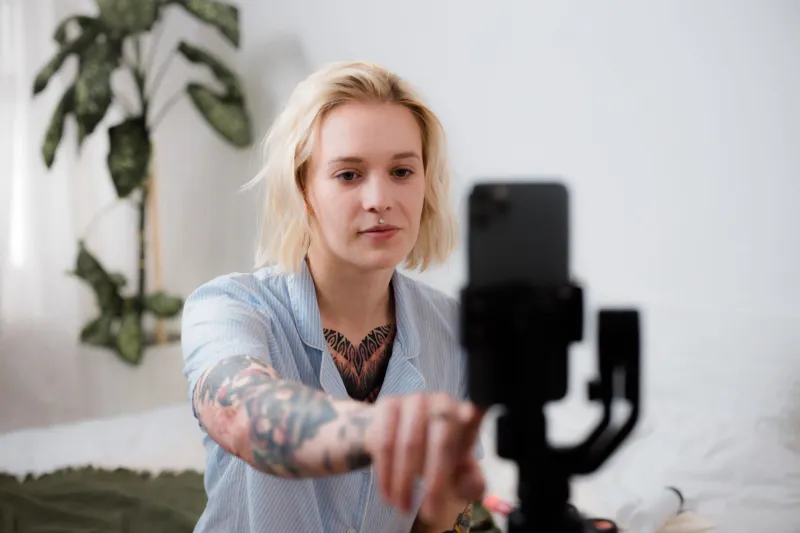
Somewhere between 8,000 and 80,000 followers lives a very specific kind of internet celebrity. Not famous enough to be on a billboard. Famous enough that you recognize their dog's name, know their sister just got engaged, and feel a small, weird pang when they don't post for a few days.
Welcome to the micro-influencer economy — and the surprisingly intense emotional territory it occupies.
The Friend Who Happens to Have a Discount Code
The appeal isn't hard to understand. Mega-celebrities feel remote by design. Their lives are aspirational in a way that's more alienating than inspiring — private jets and stylist credits and red carpets you'll never walk. Micro-influencers, by contrast, live in apartments that look like yours, stress about the same things you stress about, and talk to their cameras like they're venting to a friend over FaceTime.
That intimacy is real, even if it's one-directional. And it's incredibly effective.
Studies consistently show that micro-influencers — typically defined as creators with between 10,000 and 100,000 followers — drive higher engagement rates and more purchase conversions than their mega-famous counterparts. The reason is simple: trust. When someone who feels like a peer recommends something, it carries the social weight of a personal referral. When a celebrity does it, it just feels like an ad.
"I've been following this one creator for three years," says Jasmine, a 26-year-old graphic designer in Chicago. "She does slow fashion content, talks about her anxiety, shares her reading list. When she recommended a brand, I bought it without even thinking twice. It felt like a friend texting me a link."
She pauses. "Then I realized she'd probably gotten paid to send that 'text.'"
The Architecture of Performed Closeness
Here's what's actually happening, and it's worth sitting with: the intimacy that makes micro-influencer relationships feel real is also, at least in part, a product. Not a fake product, necessarily — plenty of creators are genuinely warm, genuinely open, genuinely trying to build real community. But the format of that intimacy is strategic, even when the content isn't.
Posting about your bad therapy session before you post your affiliate link isn't manipulation, exactly. But it's not neutral either. Vulnerability is currency in the creator economy, and the creators who've figured that out — consciously or not — are the ones who build the deepest audience loyalty.
Dr. Shira Gabriel, a psychology professor at the University at Buffalo who studies parasocial relationships, describes it this way: "Our brains aren't really wired to distinguish between people we know in real life and people we consume regularly through media. The cues we use to identify closeness — familiarity, self-disclosure, consistent presence — are all present in influencer content. The brain registers it as a relationship."
Which is fine, until the relationship does something a friend wouldn't do.
The Betrayal That Isn't Really a Betrayal
The comment sections tell the story. Scroll through any mid-size creator's posts after a major brand deal or a content pivot and you'll find a specific flavor of hurt that's hard to describe without sounding slightly unhinged — because objectively, you're upset at a stranger for making a business decision.
But it doesn't feel like that. It feels personal. It feels like being sold out.
"She used to be so real," one commenter wrote under a post from a lifestyle creator who'd just announced a partnership with a fast fashion brand. "Now she's just like everyone else."
The creator in question had 47,000 followers. She was never obligated to be 'real' in the way her audience expected. And yet the expectation existed, fully formed, because the relationship felt real.
This is the bind that micro-influencers increasingly find themselves in. Their entire value proposition is authenticity — the sense that they're not 'selling out' the way bigger creators do. But they're also running a business. At some point, those two things collide.
"I turned down a brand deal last year because I knew my audience would hate it," says a fashion micro-influencer based in Los Angeles who asked not to be named. "The brand was fine, the money was good. But I've built my whole thing on ethical consumption, and this brand had some issues. I couldn't do it without torching the trust I'd spent years building." She shrugs. "That trust is literally my income. So I guess I'm not that selfless."
When the Community Becomes a Cage
The paradox deepens when you consider what 'community' actually means in this context. Creators talk about their audiences as communities — and many genuinely invest in them, hosting meetups, responding to DMs, remembering names. But a community implies mutual obligation. And the audience side of that obligation can become suffocating.
Creators who've tried to pivot — changing their content focus, taking a mental health break, exploring a new aesthetic — often face disproportionate backlash from the very followers who claim to care about them most. The intimacy that built the relationship becomes a leash.
"People feel like they own a piece of you," says Marcus, a creator in Atlanta who shifted his content from sneaker reviews to mental health advocacy. "And I get it, kind of. They've been watching me for years. But I'm a person. I'm allowed to change."
What We're Actually Looking For
Maybe the micro-influencer phenomenon says less about creators and more about what we're hungry for in an increasingly fragmented social landscape. Real community is hard to build and easy to lose. A parasocial relationship offers the emotional texture of connection without the vulnerability of actual reciprocity.
That's not pathetic — it's human. But it's worth knowing what you're actually consuming when you hit follow. You're not making a friend. You're subscribing to a carefully (or not so carefully) constructed experience of friendship.
And sometimes, that's enough. Just don't be surprised when the discount code shows up.