Seoul to the Streets: How K-Fashion Rewired the American Wardrobe
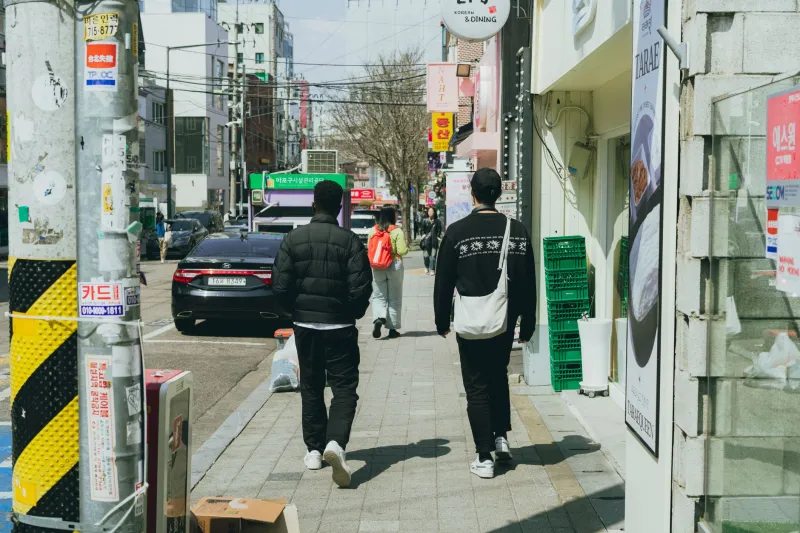
There's a moment — you've probably had it — where you scroll past an outfit on TikTok and think, where is that from? The proportions feel slightly off in the best possible way. The layering is unexpected. The color palette is muted but somehow electric. Nine times out of ten, you're looking at something that traces its roots back to Seoul.
K-fashion didn't just arrive in America. It infiltrated it — slowly, then all at once.
The Quiet Takeover Nobody Saw Coming
A few years ago, the conversation around Korean cultural exports was mostly about music. BTS sold out stadiums. Squid Game broke Netflix records. But while everyone was watching the screen, something was happening in the background: Korean street style was quietly rewriting the rules of how Americans dress.
It started, as most things do now, on social media. Korean fashion influencers and stylists were posting looks from neighborhoods like Hongdae and Apgujeong that felt genuinely different from anything coming out of New York or LA. The silhouettes were oversized but structured. The color stories were restrained but intentional. There was an obsessive attention to detail — the way a collar sat, the exact break of a trouser — that felt almost architectural.
American Gen Z noticed immediately. And they didn't just admire it. They adopted it.
By 2022, search terms like "Korean fashion aesthetic," "K-style outfit," and "Seoul street style" were spiking on Pinterest and Google. Brands like Ader Error, Musinsa, and Gentle Monster started appearing in conversations that previously would have been dominated by Supreme or Off-White. The appetite was real, and it was growing fast.
From Niche to Mainstream — Fast
What happened next was a textbook case of trend acceleration. The algorithm did its thing, and K-fashion moved from niche fashion forums to mainstream retail at a speed that would have been unthinkable a decade ago.
Mall staples like H&M and Zara began incorporating silhouettes that were unmistakably Seoul-coded — wide-leg trousers with cropped blazers, slouchy knitwear, platform Mary Janes. Meanwhile, higher-end American retailers started carrying actual Korean brands. Gentle Monster's eyewear landed in Saks. Ader Error pieces started showing up on Ssense. The pipeline from Seoul runway to American storefront got dramatically shorter.
And then there's the K-beauty crossover effect. Korean skincare had already primed American consumers to trust Korean aesthetics and innovation. When K-fashion followed the same path, it felt less like a foreign import and more like a natural evolution of something people already loved.
The Korean-American Designers Bridging Both Worlds
Maybe the most interesting part of this whole story isn't the trends themselves — it's the people translating them.
A growing wave of Korean-American designers is operating in the space between both cultures, creating work that doesn't feel like it belongs entirely to either. They grew up code-switching between Korean family dinners and American high school hallways, and that dual fluency shows up in their collections.
Designers like New York-based Ji Oh — whose draped, deconstructed pieces have been worn by everyone from Solange to Zendaya — represent a generation that doesn't see these two fashion worlds as separate. For them, Seoul's precision and New York's energy aren't in conflict. They're ingredients.
"I don't think about it as Korean fashion or American fashion," one emerging Brooklyn-based designer told us recently. "I think about what feels true right now, and right now, that truth is coming from a lot of different directions at once."
That attitude — globally informed, locally grounded — is exactly the kind of creative energy that's pushing American fashion forward in ways that feel genuinely fresh.
What Seoul Is Wearing Now (And What You'll Be Wearing in 18 Months)
If the past few years were about oversized silhouettes, muted palettes, and that very specific "quiet luxury meets streetwear" energy, the next wave looks a little different.
Walking through Seoul's fashion districts today, a few things stand out. There's a renewed interest in traditional Korean textiles and craftsmanship — hanbok-inspired cuts showing up in contemporary contexts, natural dyes, handwoven fabrics. It's heritage dressing, but filtered through a very modern lens.
There's also a growing maximalism bubbling up in response to years of minimalist dominance. Bold prints, layered accessories, and a more playful approach to color are starting to appear on the streets and runways of Seoul — which means they'll likely be hitting American shores within the next year or two.
And then there's the sustainability angle. Korean designers are increasingly working with deadstock fabrics and upcycled materials, not just as an ethical choice but as an aesthetic one. The imperfection and uniqueness of those materials are becoming part of the appeal, which aligns perfectly with where conscious American consumers are headed.
Why This Matters Beyond the Clothes
It would be easy to reduce all of this to a trend report — a list of what's in and what's out. But the K-fashion phenomenon is actually telling us something bigger about how culture moves in 2024.
For most of fashion history, the flow was essentially one-directional: Paris and New York set the agenda, and the rest of the world followed. What's happening now is fundamentally different. Seoul isn't waiting for permission. It's setting its own terms, building its own infrastructure, and letting the world come to it.
American fashion is better for it. The influence of Korean street style has pushed designers and consumers alike to think more carefully about proportion, detail, and the relationship between clothes and identity. It's raised the bar — and that's good for everyone.
The question now isn't whether K-fashion will continue to shape American style. It's how American fashion will evolve in response — and what new conversation that creates between two cultures that are, more than ever, genuinely in dialogue with each other.